These two terms get used like they mean the same thing. They do not. A moisture barrier and a waterproofing system are different products doing different jobs. Mixing them up can mean buying the wrong protection or not enough of it.
CMB has worked on Jersey Shore stucco since 1985. Here is the plain-language version of what each one does and what your home actually needs.
Quick Definition of Each
A moisture barrier slows down water vapor and small amounts of liquid water. It keeps small amounts of moisture from soaking into the wall.
Waterproofing stops water completely. Even under pressure, even from a steady stream, waterproofing holds back water entirely.
A moisture barrier is the standard protection behind stucco. Waterproofing is heavier-duty protection used in specific situations, like below grade walls or wet areas.
What a Moisture Barrier Does
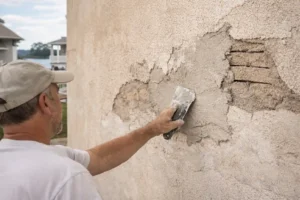
In a stucco wall, the moisture barrier sits between the stucco and the substrate. Its job is to stop the small amount of water that gets through the stucco surface from reaching the wood, drywall, or framing behind the wall.
A barrier is not perfect. It is designed to handle the kind of moisture stucco walls actually see in normal use. Some vapor passes through, and that is intentional. Walls need to breathe a little. A barrier that stops everything would trap moisture inside, which causes its own problems.
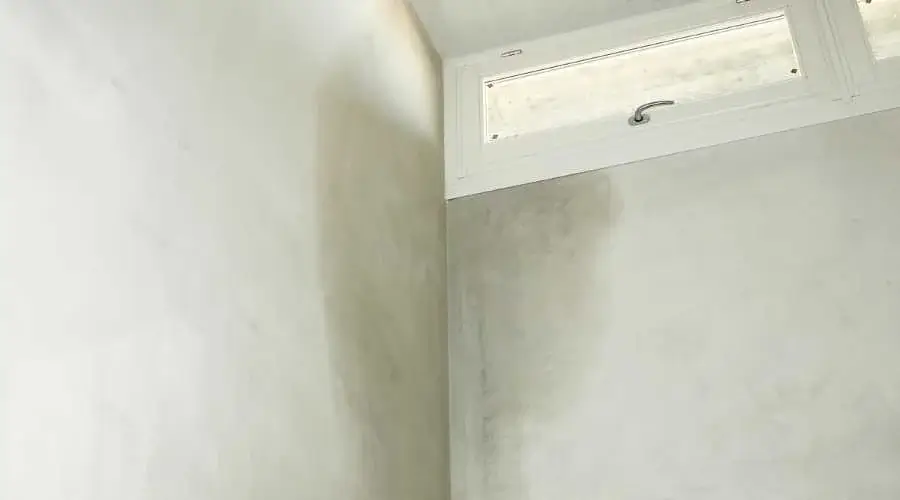
Most stucco failures we see come from a moisture barrier that has aged out, was installed poorly, or never existed at all on older homes.
What Waterproofing Does
Waterproofing is the heavy-duty version. It is rated to hold back water under pressure. You see it on:
- Foundation walls below grade
- Basements and crawl spaces
- Wet rooms like showers and pools
- Roofs and decks where water can pond
These applications need more than a moisture barrier because they deal with continuous, sometimes pressurized water exposure.
You generally do not need true waterproofing on a standard above-grade stucco wall. The barrier handles that job. Where stucco meets a foundation or a flat surface, waterproofing might enter the picture.
When You Need Each
Need a moisture barrier when:
- Building or repairing any stucco wall
- Replacing damaged stucco where the original barrier has failed
- Installing a stucco addition
Need waterproofing when:
- The wall is below grade
- The space is consistently wet
- You have a deck, roof, or flat area meeting your stucco wall
In some homes, both come into play. The above-grade walls have a moisture barrier. The foundation has waterproofing. Where they meet matters, and it is one of the spots we check on every inspection.
Why People Confuse the Two
The terms get blurred because both deal with water and both sit hidden behind finished surfaces. Marketing does not help. Some products labeled waterproof are really moisture barriers. Some barriers are sold as if they handle full waterproofing duty.
The clearest test is the level of water exposure. If the wall sees occasional wind-driven rain and humidity, a moisture barrier is the right product. If the wall is in contact with soil or sees standing water, you need real waterproofing.
What Your Stucco Home Actually Needs
For most Jersey Shore stucco homes, the answer is a properly installed moisture barrier behind the stucco, well-sealed flashings around windows and doors, and waterproofing only where the home meets the ground or any wet area.
If you are not sure what your home has, an inspection is the place to start. CMB offers free estimates and can tell you what your wall actually has and what it needs.
Call (732) 400-4020 to schedule.