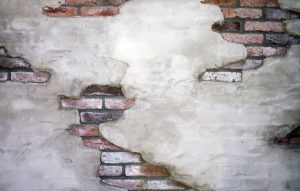

Ask ten people how long stucco lasts and you’ll hear everything from 20 years to forever. Both answers can be right. It depends on which part of the wall you mean. Here’s how long stucco lasts, how long EIFS lasts, and what usually ends them early.
The short answer
InterNACHI, the home inspectors’ group, lists stucco and EIFS at 50 years or more. That’s the wall itself. But the same chart lists caulking at only 5 to 10 years. That gap is the key to the whole question.
The wall lasts. The joints don’t.
A stucco wall is not one material. It’s the stucco or EIFS, plus the sealant at every window and door, plus metal flashing, plus the paint or finish on top. Each part has its own lifespan.
- Stucco or EIFS body: 50+ years when it stays dry
- Caulk and sealant joints: about 5 to 10 years
- Exterior paint: about 7 to 10 years
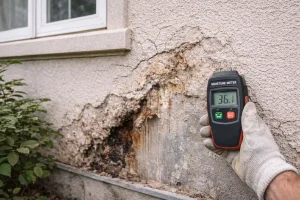
When a joint fails, water gets behind the wall. Wet sheathing rots long before the stucco wears out. So when a stucco home ‘fails’ at 15 years, the stucco usually didn’t fail. A joint did, and nobody caught it.
Does EIFS last as long as stucco?
Our EIFS vs. traditional stucco post compares the two. For lifespan, the risk with older EIFS is water with no way out, not the foam wearing out. That’s most common on EIFS from the 1990s and earlier.
What shortens stucco life at the shore
InterNACHI says its numbers assume regular maintenance and normal wear, not extreme weather. It even keeps a separate chart for coastal Florida homes. Shore exposure changes the math. Our post on coastal weather and stucco covers what salt, wind, and storms do.
One lifespan killer is easy to fix and often missed. The bottom edge of a stucco wall has a metal strip called a weep screed. The building code wants it at least 4 inches above soil or 2 inches above pavement. If mulch or pavers cover it, water can’t drain out of the wall.
How to make stucco last longer
Most of a stucco wall’s life comes down to the joints. Reseal them on time, fix cracks while they’re small, and wash gently. Our EIFS maintenance page lays out a joint-care schedule, and our stucco cleaning guide gives safe pressure numbers.
Repair or replace an old stucco wall?
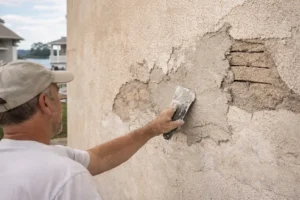
An old wall is not a failed wall. If moisture readings are normal, a 40-year-old stucco wall can keep going with crack repair, new joints, and a fresh finish. Our stucco resurfacing page covers that option. Replacement only makes sense when water has damaged the wood behind it, or the stucco has lost its bond across large areas.
Before anyone tells you to replace it
- Ask to see the moisture readings and where they were taken.
- Ask whether the damage is on every wall or just a few.
- Ask if new joints and a recoat would solve the problem instead.
A wall with dry readings and a few bad joints almost never needs to come off.
Signs your stucco is near the end
Age alone doesn’t mean replace. Returning stains, soft spots, or bulges are the signs that matter, and our stucco remediation page lists them. A moisture test tells you if a patch repair will do or if the wall needs more.
CMB Jersey Shore Stucco and EIFS Repair & Installation has worked on stucco and EIFS across New Jersey since 1985. When an owner asks how much life a wall has left, the joints are where we start.
Wondering how much life your stucco has left? Call CMB at (732) 400-4020.
Frequently Asked Questions
How long does stucco last on a house?
InterNACHI lists stucco and EIFS at 50 years or more. The caulk joints around windows and doors last about 5 to 10 years and need regular care.
What is the most common reason stucco fails early?
Water getting in at failed joints and flashing, then rotting the wood behind the wall.
Should I seal my stucco to make it last longer?
Only with a product made for your wall system. The wrong coating can slow drying and trap moisture. Keeping joints sealed does more for lifespan than coating the whole wall.