
Stucco and EIFS both get dirty. Mildew on the shady side, green streaks under the gutters, a gray film from salt air. A good wash fixes most of it. A bad wash can crack the finish, etch the surface, or push water behind the wall. Here’s how to clean stucco and EIFS the right way.
First, know which wall you have
Cement stucco and EIFS look alike, but they clean differently. Knock on the wall. Cement stucco sounds solid. EIFS sounds hollow because of the foam behind it. EIFS has a thinner, softer finish, so it needs a lighter touch. Our synthetic stucco repair page explains the difference.
Can you pressure wash stucco?
Yes, but at much lower pressure than most people think. Retail guides often suggest 1,200 to 1,500 psi for stucco. The companies that make stucco and EIFS say less.
- Sto’s stucco maintenance guide says to keep a pressure washer at about 200 to 500 psi and hold the nozzle several feet from the wall.
- Sto’s EIFS guide says not to go over 500 psi, because higher pressure can destroy the surface.
- Dryvit’s cleaning guide says to put the cleaner on at 30 to 50 psi and keep the rinse below 600 psi.
Those limits are far below what a typical gas pressure washer puts out. Turn it down, use a wide fan tip, and keep your distance. If the machine can’t go that low, use a garden hose and a pump sprayer instead.
Step by step
- Walk the wall first. Look for cracks, holes, and loose caulk. Fix those before you wash, or water will go straight in.
- Cover plants and close windows. Tape over outlets and lights.
- Wet the wall below where you’re working. Dryvit notes this stops dirty runoff from soaking in and leaving clean streaks.
- Apply a mild cleaner made for your surface. Let it sit a few minutes, but don’t let it dry.
- Scrub stubborn spots with a soft brush. Skip wire brushes and stiff bristles on EIFS.
- Rinse from the top down with low pressure.
- Let the wall dry fully before you paint or coat it.
Mildew and green growth
Green or black spots usually show up on shady walls and behind shrubs, where the wall stays damp longest. Clean them with a cleaner labeled for mildew on your surface type. Then fix the reason the wall stays damp. Trim plants back so air can reach the wall. Make sure sprinklers don’t hit it. Check that downspouts carry water away.
How often should you clean stucco?
Inland, clean when you see buildup. Near the ocean or bay, once or twice a year helps keep salt off the wall. Between real cleanings, a gentle rinse with a hose is often enough.
What not to use
Skip caustic chemicals and abrasive scrubbing. Dryvit warns these will permanently damage the finish. Skip acid cleaners too, unless the maker of your system says otherwise. Don’t sandblast. Never spray straight into window joints, vents, or light fixtures. Pressure can force water past seals that keep rain out just fine.
Shore homes: wash gently
Near the water, salt and grit build up faster. Our coastal weather post suggests a wash once or twice a year for shore homes. Keep each of those washes at the low pressures above. Every wash puts water against joints that already take wind-driven rain all winter.
When cleaning shows a bigger problem
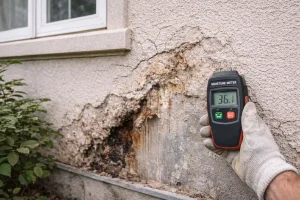
Sometimes washing reveals what dirt was hiding. Stains that come right back, new cracks, or soft spots usually mean water is coming from inside the wall. That’s a job for stucco water damage repair, not more cleaning. Faded color is a separate issue, covered in why stucco color fades.
CMB Jersey Shore Stucco and EIFS Repair & Installation is a stucco and EIFS repair contractor, serving New Jersey since 1985. We don’t sell cleaning products. We fix what cleaning uncovers.
Found cracks, soft spots, or stains that won’t wash off? Call CMB at (732) 400-4020.
Frequently Asked Questions
How do you clean stucco without a pressure washer?
Use a garden hose, a pump sprayer with a mild cleaner, and a soft brush. Wet the wall below first, work in small sections, and rinse from the top down.
Can you power wash EIFS?
Yes, gently. Sto says not to exceed 500 psi on EIFS. Dryvit says to keep the rinse below 600 psi. Use a wide fan tip and stay well back from the wall.
What’s the best cleaner for stucco?
A mild cleaner made for your surface. Dryvit warns that caustic chemicals and abrasive cleaning will permanently damage its finishes. Avoid acid cleaners unless your system’s maker approves them.
Why did my stucco streak after I washed it?
Dirty runoff soaked into dry wall below. Wetting the lower wall first helps prevent it, as Dryvit’s guide notes.
Should I clean stucco before painting it?
Yes. Paint needs a clean, dry surface to stick. Wash gently, let the wall dry fully, and repair cracks before any paint or coating goes on.