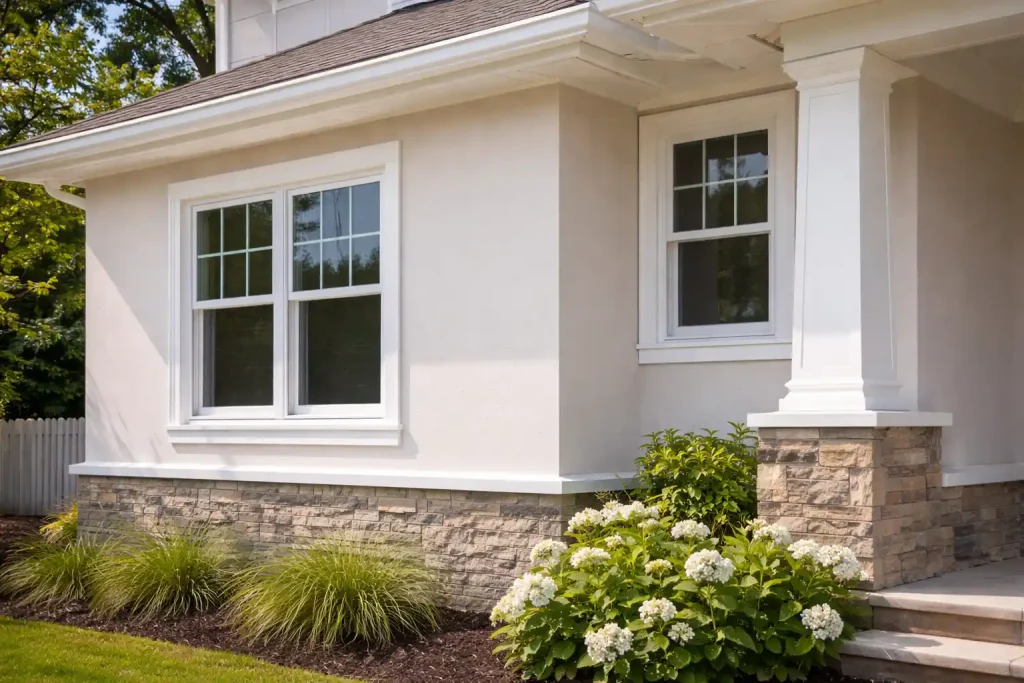
Drive through any Jersey Shore neighborhood and you will see it. Stucco homes that used to be a deep tan now look beige. A house that started warm gray now looks chalky. Stucco color fades. The question is why, and what you can do about it.
CMB has worked on Jersey Shore stucco since 1985. We see fading on every job. Some of it is normal. Some of it is fixable. Here is the breakdown.
How Stucco Color Works
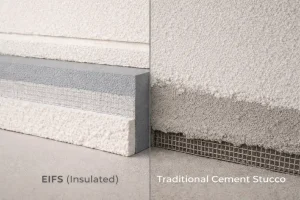
Most stucco color comes from one of two places. Either the color is mixed into the finish coat itself (called integral color), or it is applied as a coating on top after the stucco cures.
Integral color tends to fade more evenly. Applied coatings can chip, peel, or fade in patches. Both lose intensity over time. Neither is permanent.
The Main Causes of Fading
Sun and UV Exposure
The biggest factor is the sun. UV light breaks down pigments in stucco the same way it fades a couch by a window. South and west walls take the worst of it on the Jersey Shore. North walls usually look fresher because they get less direct sun.
Salt Air on Coastal Homes
Living near the ocean is great. It is also hard on stucco. Salt air carries fine particles that settle on the finish and slowly etch the surface. Over years, that etching dulls the color. Coastal homes in Ocean County and Monmouth County tend to fade faster than homes a few miles inland.
Wind and Sand
Wind-driven sand acts like sandpaper. It is mild, but constant. Beachfront and bayside homes pick up more of it than homes farther from the water. The finish loses a thin layer over time, and with that layer goes the color.
Age and Cure Time
Stucco keeps curing for years after it goes up. The color you see in year one is not the color you see in year ten. Some lightening is normal. Modern stucco usually settles within the first two to three years and then holds steady, but the original deep color is gone for good after that.
Why Some Walls Fade Faster Than Others
Two walls on the same house can look completely different a decade in. Reasons include:
- Sun exposure (south and west fade fastest)
- Tree cover or shade structures
- Whether the wall faces the ocean
- The original color (deep colors fade more visibly than light ones)
- Whether the wall was patched or repainted at any point
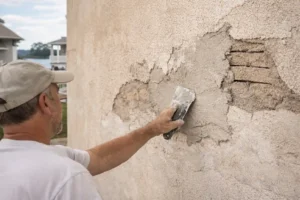
A wall that was patched three years ago will sit at a different fade rate than the original stucco around it. That is when most homeowners start noticing the patch.
Can You Stop Stucco From Fading?
You cannot stop it completely. You can slow it down. Options that help:
- A quality stucco paint with UV protection
- Routine washing to remove salt and grit
- Sealants designed for stucco surfaces
- Re-coating sun-heavy walls every several years instead of waiting for the whole house to need it
A real fix usually means combining two or three of these. A wash alone will not bring back faded color, but it will keep the surface clean enough to last longer.
When to Call a Pro
If your stucco looks washed out, has uneven patches, or shows mineral staining, it is worth a professional look. CMB offers free estimates on the Jersey Shore. We can tell you whether the wall needs a fresh paint job, color matching on a specific area, or a full stucco repair.
Call (732) 400-4020 to schedule.