
Home » Stucco Facade Repair in Long Branch
Stucco and EIFS experts serving the Jersey Shore since 1985
✓ Over 40 years in business
 Founded 1985
 Still owner-involved on every project not just one system
What’s Covered on This Page
Need Stucco Facade? Call (732) 400-4020

Quick Summary:
Cracks, stains, and bulges aren’t three separate problems. They’re symptoms of the same thing: water getting behind your stucco. Which one you’re looking at just tells us how far along the problem is and how big the repair will be.
Cracks are what we get called about most. A hairline crack that spreads out like a spider web is usually just the wall moving a little, and that’s normal. A crack running in one straight line, though, especially near a window corner, is a different animal. That kind of crack means water has been working behind the finish.
Staining tells its own story. Dark streaks below a window or roofline usually mean water found a way in and is running down inside the wall. On EIFS walls we see rust colored spots around fasteners and trim, and that almost always means moisture is sitting somewhere it shouldn’t be.
Bulging spots worry us the most. Press on the wall. Does it give a little? Feel spongy under your hand? That’s water damage that’s had time to work. The wood sheathing behind the stucco can start to rot, and once that happens, we’re not talking about a patch anymore.
Wondering if that stain over your garage is normal? It’s not, not if it wasn’t there last summer.
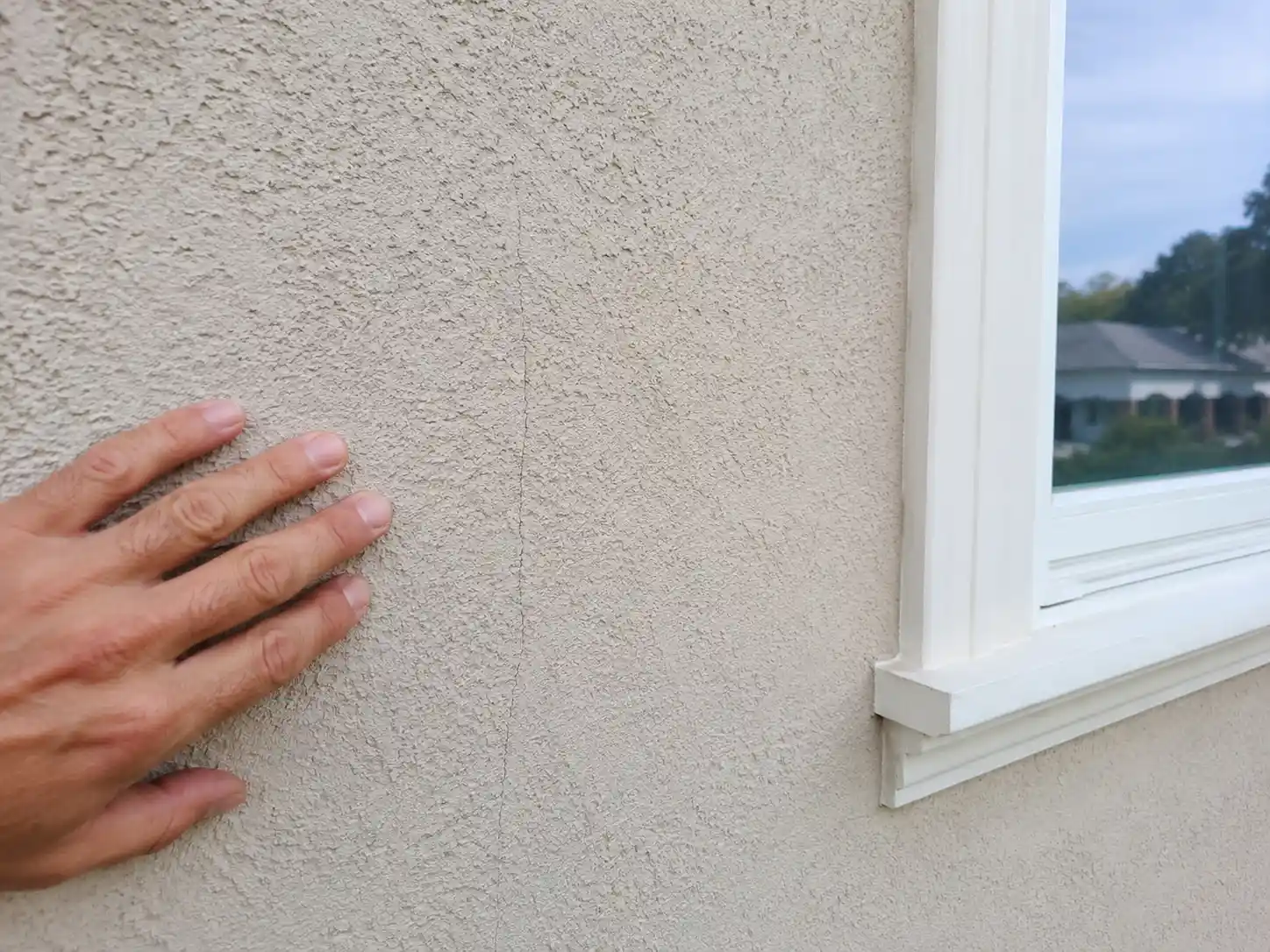
Here’s the truth: most hairline cracks in stucco don’t mean your wall is failing. Stucco moves a little with heat and cold, and thin surface cracks, thinner than a credit card, are usually just that, surface cracks. We see this every single week. Someone calls us worried sick over a crack that’s been sitting there for three summers doing absolutely nothing.
So how do you know the difference? A hairline crack that stays the same size, has no staining around it, and doesn’t feel soft when you press it can probably wait. Cracks near windows, around roof lines, or low along the foundation deserve a closer look, though. Long Branch homes near the oceanfront take a beating from wind driven rain during nor’easters, and that kind of weather pushes water into cracks that would stay dry anywhere else.
If your wall checks those boxes, save your money for now, but keep an eye on it once a season. It’s a change in the cracking, staining that shows up out of nowhere, or a soft spot underfoot that tells us there’s real water intrusion behind the finish. That’s a different conversation, and it’s one worth having sooner rather than later.
Not all stucco is the same stucco. That surprises a lot of homeowners in Long Branch, especially in older sections near the water where houses have been re-sided and re-coated over the decades. Traditional cement plaster is a hard, thick coat over a wire lath. EIFS looks similar from the sidewalk, but it’s built over rigid foam board with a thin synthetic finish on top.
Here’s why that matters. Cement plaster can breathe a little and dry out over time, so a crack there often stays a cosmetic problem longer. EIFS can’t breathe the same way. Trapped water behind foam board causes rot and mold before you ever see a stain on the outside.
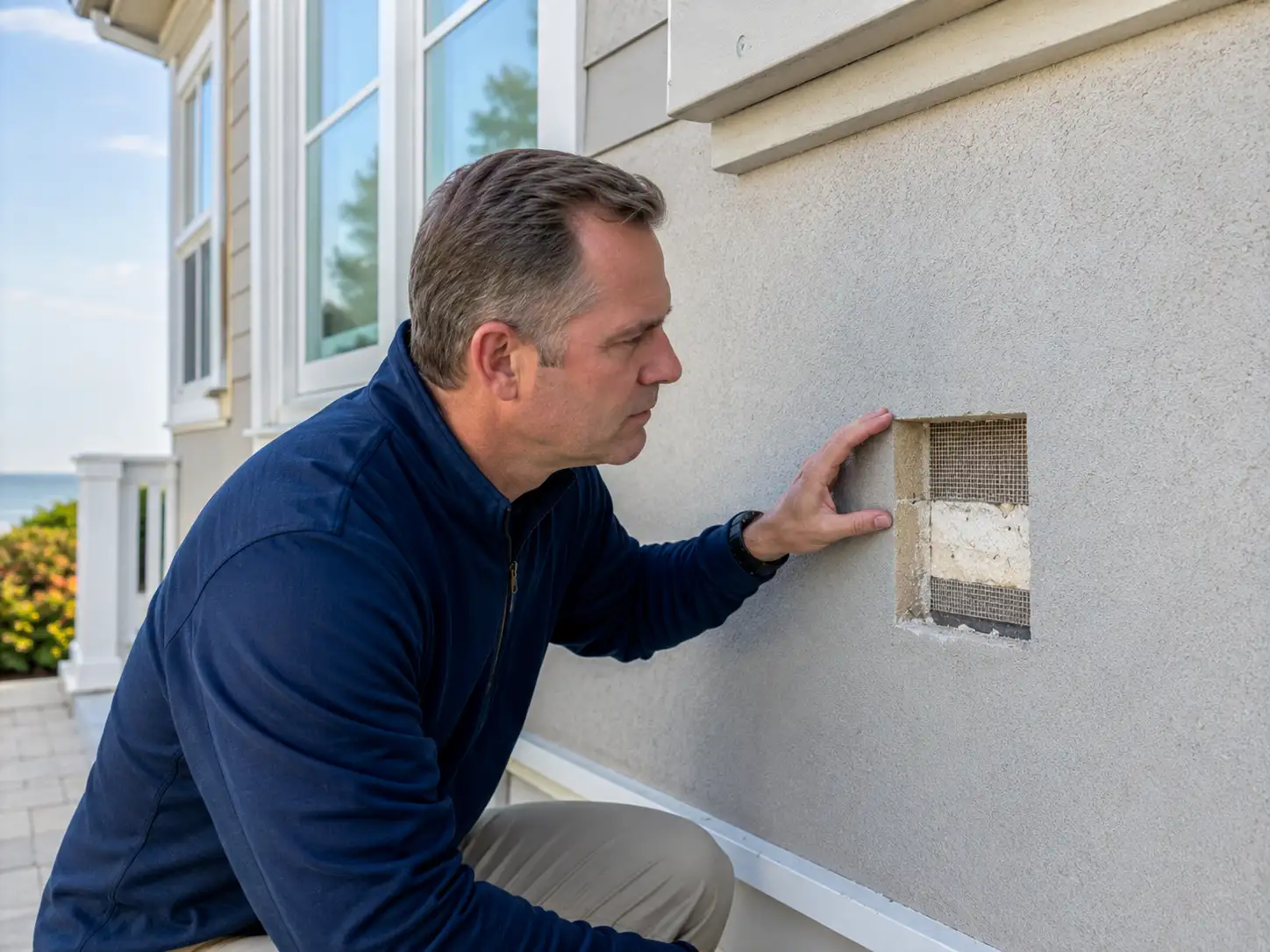
Many homes built in this region before 1999 have EIFS with no drainage plane at all. Standards improved after that, but most owners have no idea which version is on their own wall. We check for that first, every time.
So the repair plan changes based on what we find underneath.
CMB Jersey Shore Stucco and EIFS Repair & Installation has worked on both systems since 1985, and our team treats hard coat stucco, cement plaster, and EIFS repair as three different jobs, not one. A patch that works fine on one system can trap water on another, and that’s the whole point of getting the identification right first.
Have questions? We’re happy to help.
Call (732) 400-4020. CMB Jersey Shore Stucco and EIFS Repair & Installation is ready to help.
Here’s the part most contractors get wrong. They fix the crack, but the patch looks like a scar on the wall, wrong texture, wrong shade, and now you’re staring at it every time you pull into the driveway.
Stucco isn’t one texture. It’s a family of finishes, and the tool used to apply it changes the whole look of the wall. Getting a patch to disappear means matching the tool, the hand motion, and the mix, not just the color.
Color is its own headache. Stucco fades with sun and salt air, and homes near Long Branch’s waterfront blocks see that fading faster than homes set back from the coast. A patch mixed to match today’s stock color will look too bright next to a wall that’s spent years in that salt exposure. We mix and test on site, then adjust before we commit to the wall.
This is where CMB spends most of its time on repair jobs.
We’re known for taking on the spot repairs other contractors turn down, the tricky blends where the patch has to vanish into a finish that’s been on the house for twenty or thirty years. It’s not fast work, but a patch that shows is worse than no patch at all, so we don’t rush the texture match just to save an hour.
Homes along Ocean Avenue and anywhere close to the water take a beating that inland houses just don’t get. Salt air eats at caulk joints and sealant faster than plain rain does. Add wind driven storms off the Atlantic, the kind Long Branch sees every fall and winter, and water gets pushed sideways into walls instead of just running down them.
We’ve worked on waterfront homes across Monmouth County, and the pattern repeats. Stucco or EIFS that would last decades in a quiet inland neighborhood shows staining and soft spots years sooner near the shore.
Nor’easters are the real test. Heavy wind driven rain finds every gap around windows, trim, and old sealant joints, and once water gets behind the finish, it doesn’t dry out fast in humid coastal air.
So what should a Long Branch homeowner do? Check sealant around windows and doors every year, not every five years. Look at your wall after a big storm, not just in spring.
A house two blocks from the beach needs a different maintenance rhythm than one further inland. That’s just how it works here.
More often than not, when we get called out to a shore property, it’s because someone noticed a stain after a storm and finally decided to look closer. Don’t wait for that stain to spread.
Common questions about Stucco Facade
We can usually get out within a few days of your call, sooner if you’re seeing staining or a soft spot. Long Branch homes near the oceanfront take extra wind driven rain during nor’easters, so we try to move quickly on those calls. When you reach out, tell us where the crack is and whether the wall feels soft. That helps us bring the right tools on the first visit instead of a second trip.
We start by pressing on the wall and checking if it’s a hard coat cement system or EIFS with foam board underneath. That tells us how the repair needs to go, since EIFS traps water in a way cement plaster doesn’t. We look at every crack, stain, and soft spot you’re worried about, not just the one you called about. You’ll get a clear answer on what’s cosmetic and what needs real work before we start.
Yes, homes closer to the oceanfront blocks see faster fading and more water intrusion through cracks than homes set back from the coast. Salt air and wind driven rain push moisture into small openings that would stay dry elsewhere. That’s why a crack that looks harmless on an inland home can turn into a bigger problem near the water. If your house sits close to the shore, it’s worth checking cracks a little more often.
A thin, straight crack that hasn’t grown, has no staining, and doesn’t feel soft can usually wait. Check it once a season for changes. Cracks near windows, roof lines, or low along the foundation deserve a closer look sooner, especially if you notice new staining or a spot that gives when you press it. That kind of change means water has started working behind the finish, and it’s worth a call before it spreads.
Yes, matching texture and color is the part of a patch job we spend the most time on. Stucco comes in different finishes, like sand, dash, or lace texture, and the tool used changes the whole look of the wall. We mix and test color on site before committing, since sun and salt air fade stucco over time. That extra step is what keeps a patch from looking like a scar on your wall.
Yes, we treat cement plaster and EIFS as two different jobs because they behave differently once water gets in. Cement plaster can breathe and dry out, so a crack there often stays cosmetic longer. EIFS traps moisture behind foam board, so it can rot before any stain shows outside. We check which system is on your wall first, since many homes built before 1999 have EIFS with no drainage layer at all.
With nearly 40 years of experience since 1985, we at CMB Jersey Shore Stucco and EIFS Repair & Installation, have been perfecting the art of standardized and/or customized stucco finishes. Call Now (732) 400-4020
Effective & Fast Service
Available for 24/7 Emergency Assistance
Quick & Easy Communication
Effective & 100% Satisfaction Guarantee
FREE Appraisal with NO Commitment
Cost-Efficient & Reasonable Pricing
Flexible Schedule at Your Convenience
Awesome 5-Star Customer Satisfaction
CMB Jersey Shore Stucco and EIFS Repair & Installation’s residential and commercial work is always accomplished with
excellent craftsmanship for beautiful and durable results.
 Call (732) 400-4020