
A stucco house can look perfect and still have wet, rotting wood behind the walls. You won’t see it at the open house. You might not see it in a general home inspection either. The good news is that New Jersey’s home buying process gives you a window to find out. Here’s how to use it.
Why Stucco Needs Its Own Inspection
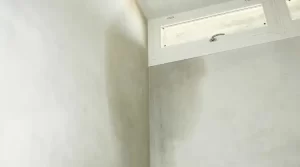
A general home inspector mostly reports what they can see. Water damage behind stucco usually can’t be seen until it’s advanced. By the time the stucco bulges or paint inside peels, the sheathing may already be soft.
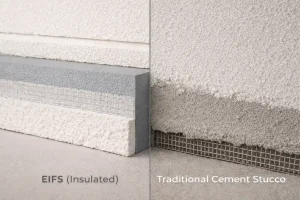
Older EIFS deserves extra caution. EIFS installed in the 1990s and earlier often has no way to drain water that gets behind it. From the curb, it looks just like hard coat stucco. Our guide to EIFS vs. traditional stucco explains the difference.
How the New Jersey Timeline Works
- Attorney review. If a real estate agent prepared your contract, New Jersey gives both sides three business days of attorney review. This is when your attorney can add or change inspection terms.
- Inspection period. After attorney review, many contracts give buyers about 10 to 14 days for inspections. Yours may differ.
- Repair requests. After the inspection, there’s usually a short deadline to send your requests to the seller.
Use attorney review to make sure your contract names stucco testing and leaves enough time for it. Stucco results can take several days to come back.
The Three Levels of Stucco Inspection
- Visual. Looking for cracks, stains, missing sealant, and trouble spots.
- Scanning. Tools that hint at moisture without drilling. Useful for picking where to test, but not proof.
- Invasive moisture test. Small holes are drilled at high-risk spots, and probes read the moisture in the wood behind the stucco. The holes are sealed afterward. This is the test that tells you if the wood is wet.
The seller has to give written permission before anyone drills. Ask for it early so it doesn’t eat into your inspection days.
Where Testers Should Probe
- Below window corners, especially the bottom corners
- Where a lower roof meets a stucco wall
- Along the bottom of the wall near the weep screed
- Around decks, balconies, and railings attached to the house
- Near chimneys and anywhere stucco meets another material
If the report shows only a few holes on one side of the house, ask why.
Reading the Report Without Panicking
A stucco report lists moisture readings by location, usually with photos. A single high reading doesn’t always mean the whole house is failing. A pattern of high readings under several windows tells a different story. Ask the inspector:
- Which readings worry you most, and why?
- Is this local damage or a sign of a system-wide problem?
- What would you want repaired before closing?
One more New Jersey detail: home inspectors here must be state-licensed, and a stucco moisture test is not the same as a licensed home inspection. You usually want both. The home inspector looks at the whole house. The stucco test looks behind the walls.
Then get a repair scope from a stucco contractor. A report tells you where the water is. A contractor tells you what fixing it involves. Before you hire one, run through our five checks for choosing a stucco contractor. Our guide to stucco repair costs in New Jersey gives you a starting range.
A Mistake Buyers Regret
Some buyers cancel the stucco test after the general inspection comes back clean. It feels like saving money. But at least one court case involved a buyer who canceled the invasive test after a clean general inspection, moved in, and then found serious water damage behind the stucco. A general inspection was never designed to catch that.
Selling a Stucco Home? Test First
If you’re selling, testing before you list lets you fix problems on your own schedule and show buyers the results. If the test finds trouble, you can repair it first or price it in. Either way, buyers see a report instead of guessing, and that takes a lot of fear out of the deal.
How We Can Help
CMB Jersey Shore Stucco and EIFS Repair & Installation has worked on stucco and EIFS since 1985. Our stucco inspection uses small test holes and moisture readings, then gives you a full written report. For foam-based walls, see our EIFS inspection. If an inspection already found problems, we handle corrections after a stucco inspection.
Buying or selling a stucco home? Call CMB at (732) 400-4020 as soon as your contract is signed.
Frequently Asked Questions
How much time do I need for a stucco test when buying in NJ?
Plan for the test and the report to fit inside your inspection period, which is often 10 to 14 days after attorney review. Book early, and get the seller’s written permission to drill as soon as you can.
Will the test holes damage the house?
The holes are small and get sealed after testing. On a careful job, they’re hard to spot. Ask how the holes will be sealed before testing starts.
What if the seller won’t allow invasive testing?
Talk with your attorney. Some buyers treat a refusal as a reason to renegotiate or walk away, especially on older EIFS homes. A refusal tells you something too.
Does a newer home need a stucco test?
It’s still worth considering. Many stucco problems come from how flashing and barriers were put in, not from age. Newer homes can have those mistakes too.