
Home » Light Carpentry in Long Branch
Stucco and EIFS experts serving the Jersey Shore since 1985
✓ Over 40 years in business
 Founded 1985
 Still owner-involved on every project not just one system
What’s Covered on This Page
Need Light Carpentry? Call (732) 400-4020

Quick Summary:
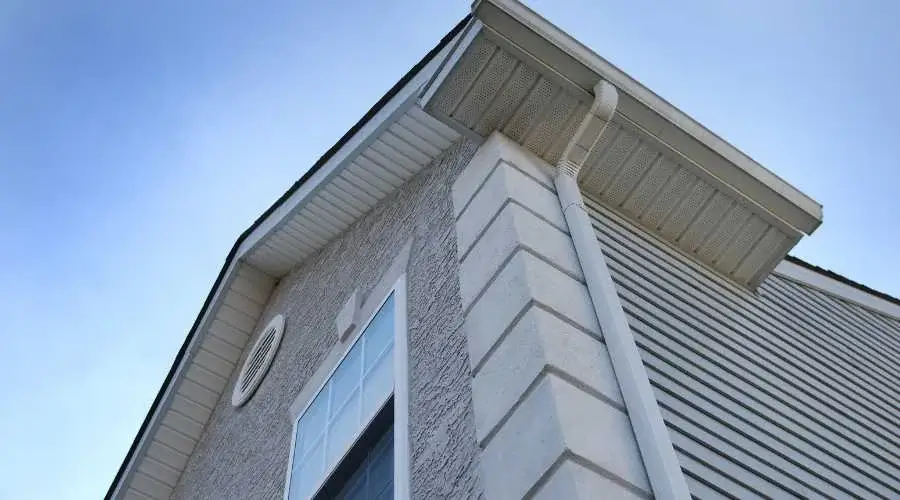
Soft wood, dark staining, and gaps where trim meets stucco almost always mean water’s been getting behind the wall. Catch it early and the repair stays small instead of turning into a bigger rebuild.
Most homeowners notice the trim before they ever notice the stucco itself. A window sill that flexes under a little pressure. A fascia board where the paint’s peeling in just one spot. These look like small things, but they’re worth paying attention to. Wood doesn’t rot from the outside in for no reason, it rots because water found a way in and never dried out.
Long Branch homes near the beachfront take this harder than most. Salt air and near-constant moisture speed up wood decay around window and door trim, especially on older houses built before drainage planes were standard practice. We’ve opened up trim on these homes and found sheathing that looked perfectly fine from the street but was soft as cardboard underneath.
Here’s the thing: stucco repair that skips the wood behind it doesn’t hold. We can patch the finish, but it’ll fail again in a season or two, because the stucco was never the real problem.
Wood doesn’t rot the same way here as it does inland. Long Branch sits right on the water, and homes along Ocean Avenue and the blocks near the boardwalk take a beating from salt air and wind-driven rain almost year-round. Salt holds moisture against wood longer than plain rain does. That moisture soaks into trim, fascia boards, and window casings, and it just sits there.
We see this every single week. A homeowner points out a soft spot on a window sill or a piece of trim swelling near a stucco joint, and it’s the same story every time: water got behind the wood and never fully dried out.
Freeze and thaw makes it worse. Wet wood expands, then freezes and cracks, then thaws and lets in even more water, and the cycle repeats every winter. Add in wind-driven rain pushing water sideways into gaps around trim and stucco transitions, and you’ve got wood failing years before it should.
Salt spray also breaks down paint and sealant faster than inland weather does. Once that protective layer wears thin, bare wood is left exposed with nothing stopping the moisture. That’s why light carpentry repairs near the water tend to involve more rot than the same job would inland.
Curious why your trim looked fine one season and soft the next? That’s usually how fast this cycle moves once water finds a way in. Call (732) 400-4020
Here’s the truth: not every crack in your stucco means you need carpentry work done.
Stucco moves a little with heat and cold, so it’s normal for hairline cracks to show up over the years. Thin, spiderweb-style cracks that don’t widen and don’t feel soft underneath are almost always cosmetic. That’s a surface issue, not a structural one, and we patch it and match the color in a day, no wood involved.
So how do you know it’s more than that? Press a screwdriver handle gently against the stucco near a window or door corner. If it feels spongy or sinks in, that’s a red flag. Wood behind that wall may already be soft.
Homes near Ocean Avenue and other spots close to the water take a beating from salt air and wind-driven rain. That moisture works its way into wood trim and sheathing faster than it does further inland, which is why we see more rotted framing on beachfront properties than on homes a mile or two west.
If your crack is just cosmetic, don’t let anyone talk you into more work than you need. We’ll tell you straight when a patch is all it takes.
Not sure what your Light Carpentry project needs? Ask us. (732) 400-4020
Call (732) 400-4020. CMB Jersey Shore Stucco and EIFS Repair & Installation is ready to help.
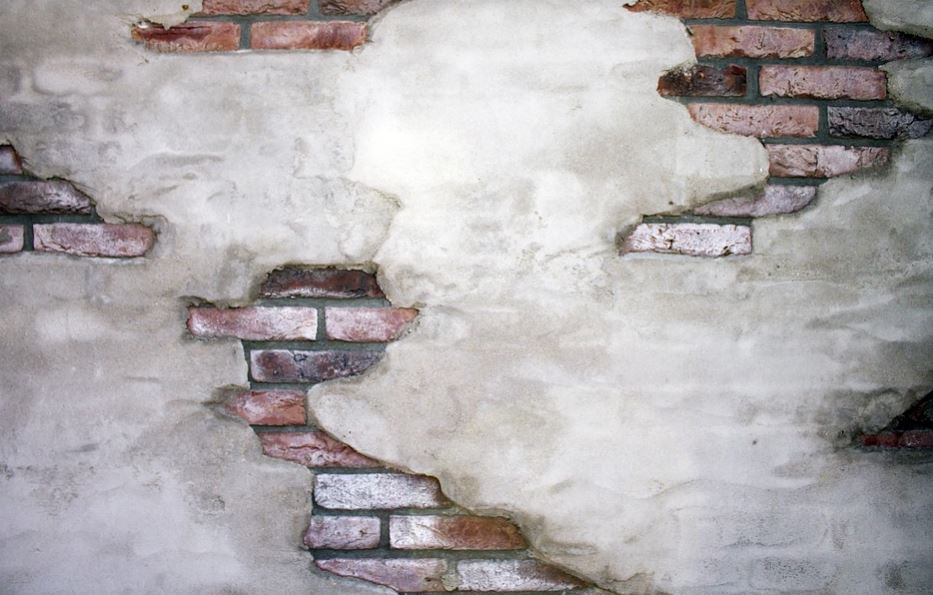
Cutting into the wall is the moment we find out what’s really going on. A crack on the surface might mean nothing, or it might mean the wood sheathing behind it has been sitting wet for years. You can’t tell that from the driveway. We can, once we’re inside the wall.
Once we pull back the stucco or the EIFS panel, we’re looking at the layer underneath: the moisture barrier, the lath, and the sheathing itself. If water has been getting in, this is where it shows up.
On older shore properties near the Long Branch oceanfront, we run into EIFS systems installed before 1999 that never had a drainage plane built in at all. Standards changed after that, but plenty of homeowners have no idea which system is on their house until we open it up.
Sometimes the damage is contained to a small section. Sometimes it’s spread further than the crack ever suggested.
That’s why we don’t guess at scope from a photo or a phone call. We look, we explain what we found in plain terms, and we tell you what it’ll take to fix it right, whether that’s a spot repair or something more involved. Call (732) 400-4020
Here’s the part most contractors skip. Fixing the hole is easy. Making it disappear is the hard part.
Stucco isn’t one product, it’s a system, and every house wears its finish a little differently. Sun fades one wall faster than the shaded side. Older cement stucco often has a heavier, hand-troweled texture, while newer coats go on smoother. We match both the texture and the color before we ever touch a trowel to your wall, which means checking whether you’ve got traditional hard-coat stucco or an EIFS system, since they patch differently and need different prep.
We see this a lot in West End, where many homes went up before 1999 and never got a drainage plane behind the EIFS. Add decades of sun and salt air, and the surface color shifts unevenly across the wall.
So how do we blend a patch into a 20-year-old finish? A few things matter more than others.
Nine times out of ten, a mismatched patch isn’t bad work, it’s just the wrong approach for that specific wall. We’ve done this on brownstones and waterfront homes alike, and no two walls match the same way twice. Call (732) 400-4020
Common questions about Light Carpentry
We can usually get out within a few days of your call, sooner if the damage looks serious. Homes near Ocean Avenue and the boardwalk tend to get priority since salt air speeds up rot once wood gets wet. When you call, tell us what you’re seeing, soft spots, staining, or a growing crack. That helps us know what tools and materials to bring so we can diagnose it right the first visit instead of coming back twice.
We start by pressing on the trim and checking the stucco for soft spots, staining, or gaps before we cut anything open. You’ll see us test areas near windows and corners first, since that’s where water usually gets in. If something feels spongy, we’ll explain what that likely means and whether we need to open the wall. You get a plain answer about what’s cosmetic and what’s a real repair before we start any work.
Salt air holds moisture against wood longer than regular rain does, so trim near the beachfront rots faster than it would inland. Homes along Ocean Avenue and near the boardwalk take the hardest hit from wind-driven rain and salt spray, which also breaks down paint and sealant faster. Once that protective layer wears thin, water gets into the wood and doesn’t fully dry out. That’s why we see more rot on shore properties than homes even a mile or two west.
A thin, hairline crack that doesn’t widen or feel soft underneath is almost always cosmetic and just needs a patch. Press a screwdriver handle gently against the stucco near a window or door corner. If it sinks in or feels spongy, that’s a sign the wood behind it is already damaged. Dark staining, a musty smell, or a wall that flexes when pressed are all signs you need more than a surface fix.
Once we pull back the stucco or EIFS panel, we check the moisture barrier, the lath, and the wood sheathing underneath for damage. On older Long Branch shore properties, we often find EIFS systems installed before 1999 that never had a proper drainage plane built in. Sometimes the damage is small and contained. Other times it’s spread further than the surface crack suggested. Either way, we explain what we found before deciding on a spot repair or something bigger.
Yes, matching your existing finish is part of the repair, not an extra step we skip. We look at the texture, color, and system type before starting, whether it’s traditional stucco or an EIFS panel setup common on older shore homes. Fixing the wood behind the wall is only half the job. If the patch doesn’t blend with the surrounding finish, it stands out and can also fail again if it’s the wrong material for your wall system.
With nearly 40 years of experience since 1985, we at CMB Jersey Shore Stucco and EIFS Repair & Installation, have been perfecting the art of standardized and/or customized stucco finishes. Call Now (732) 400-4020
Effective & Fast Service
Available for 24/7 Emergency Assistance
Quick & Easy Communication
Effective & 100% Satisfaction Guarantee
FREE Appraisal with NO Commitment
Cost-Efficient & Reasonable Pricing
Flexible Schedule at Your Convenience
Awesome 5-Star Customer Satisfaction
CMB Jersey Shore Stucco and EIFS Repair & Installation’s residential and commercial work is always accomplished with
excellent craftsmanship for beautiful and durable results.
 Call (732) 400-4020