Most stucco problems start small and quiet. A thin crack. A faint stain. Nothing that screams emergency. Then water gets behind the wall, works on the wood, and the cheap early fix turns into an expensive late one. Here is how to read the warning signs on a New Jersey home, and what each one usually means.
What it looks like: thin lines in the surface, often near corners or windows. What causes it: normal settling, or the freeze-thaw cycle that NJ winters bring. Water slips into a crack, freezes, and pushes it wider each year. Why it matters: a hairline crack is often cosmetic, but the ones near windows and penetrations are the ones that let water in. The fix: clean stucco repair before the crack starts to spread.
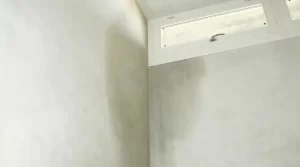
What it looks like: dark streaks or blotches, usually under windows, along the base of a wall, or near the roof line. What causes it: water getting in and moving through the wall. Why it matters: staining means moisture is already active, not just possible. On a Shore home, salt air and driven rain make this worse. The fix: find the source first, then stucco water damage repair.
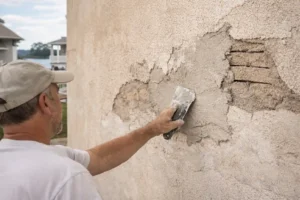
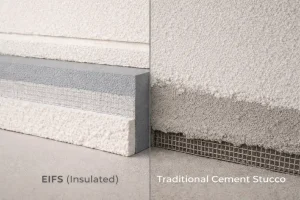
What it looks like: an area that pushes in slightly, feels soft, or sounds hollow when you knock. What causes it: water has gotten behind the surface and damaged the substrate, or in an EIFS wall the finish is separating from the foam. Why it matters: this is past cosmetic. The wall itself is compromised. The fix: inspection right away, and likely repair or, if it has spread, remediation.
What it looks like: a chalky white film on the surface. What causes it: moisture moving through the stucco, carrying salts that get left behind as the water dries. Why it matters: sometimes it is harmless surface evaporation. Often it is a sign that water is moving where it should not. It is worth a look either way.
What it looks like: paint bubbling, flaking, or the finish coat lifting off. What causes it: trapped moisture pushing outward, or an old finish at the end of its life. Why it matters: peeling is the wall telling you the surface is no longer sealed. On the Shore, sun and salt speed this up. The fix: refinish and reseal, sometimes paired with stucco waterproofing.
What it looks like: open joints or missing sealant where the wall meets a window, door, vent, or pipe. What causes it: sealant dries out and shrinks over 5 to 10 years. Why it matters: these joints are the number one way water gets behind stucco and EIFS. Most of the big repairs we do started as a failed joint nobody resealed. The fix: reseal on schedule, before the water gets in.
One more thing worth knowing. These signs rarely show up alone. A crack near a window often comes with a stain below it and a soft spot behind it. When you see two or three together, that is the wall telling you water is already inside.
Monitor: a single hairline crack away from any opening, light surface discoloration you can wipe off, a small spot of efflorescence. Watch it through a season.
Call now: cracks that are growing, multiplying, or near windows. Stains that keep coming back. Any soft spot, bulge, or hollow sound. Peeling finish. Open gaps around openings. These mean water is getting in, and time only makes the bill larger.
If you are buying a home and you see any of these, a Stucco Inspection before closing is the smart move. We also do Correction After Stucco Inspection when a report turns up problems. Rich Lapinski founded CMB Jersey Shore Stucco and EIFS Repair & Installation in 1985. Over 40 years of stucco and EIFS work across New Jersey. We answer emergency calls 24 hours a day, 7 days a week.
What it looks like: rusty streaks running down from a window, a vent, or a corner. What causes it: the metal flashing or fasteners behind the stucco are corroding, usually from salt air or trapped water. Why it matters: rust means metal is failing where it is supposed to keep water out. The fix: replace the flashing and repair the surrounding wall before the leak spreads.
What it looks like: cracks that line up in a grid, or that run in long straight lines across a wall. What causes it: movement at the joints between panels, or stress in the system itself. Why it matters: random hairlines are often cosmetic. Patterned cracks usually point to something structural underneath. The fix: inspection to find the cause, then targeted repair.
Most of these signs are cheaper to prevent than to fix. Walk your walls twice a year. Spring and fall is a good rhythm. Look low, look around every window, and look where the roof meets the wall. Catching a failed sealant joint early is the single best thing a homeowner can do.
Seeing any of these signs on your NJ home? Call CMB at (732) 400-4020 to schedule a visit, or contact us online before a small problem grows.
Q: How long can I wait if I see hairline cracks?
A: Hairline cracks are often cosmetic and can be monitored. But if they grow, multiply, or appear near windows and penetrations, water can get in. We recommend inspection within a season, not years.
Q: Is efflorescence (white powder) a sign of damage?
A: Yes and no. It means moisture is moving through the stucco and depositing salts as it dries. Sometimes it’s harmless surface evaporation. Often it’s a sign of water intrusion that needs investigation.
Q: Do you offer free stucco inspections in New Jersey?
A: Call (732) 400-4020 to schedule a visit, and we’ll give you a straight assessment of what your wall needs.