
Home » Exterior Walls in Long Branch
Stucco and EIFS experts serving the Jersey Shore since 1985
✓ Over 40 years in business
 Founded 1985
 Still owner-involved on every project not just one system
What’s Covered on This Page
Need Exterior Walls? Call (732) 400-4020

Quick Summary:
A crack or stain on your exterior wall is rarely the actual problem. It’s usually a sign of water trapped behind the stucco or EIFS, and left alone, that water leads to rot and mold. On every job, we look past the surface to find where it’s really getting in.
Most homeowners call us about a crack. Fair enough, that’s what you can see. But a hairline crack that’s been sitting there for two summers is a different animal from one that showed up last month next to a dark stain. The stain is the tell. Water found a way in, and it’s been sitting behind the wall doing damage you can’t see yet.
Long Branch homes near the ocean take a beating from wind-driven rain, especially on the sides facing Ocean Avenue. That kind of exposure pushes water into small gaps that would stay dry further inland. That’s why the signs below carry more weight here than they might in a landlocked town.
Nine times out of ten, when we find one of these signs, there’s already moisture behind the wall. That’s the thing to worry about, not the crack itself. Cracking, bulging, staining, they’re just how the wall tells you water got in first.
Here’s something a lot of homeowners don’t know. Not every exterior wall is the same material, even when they look identical from the sidewalk. Hard coat stucco is cement, sand, and lime troweled over a wire lath. It’s heavy, hard, and it breathes. EIFS looks like stucco but isn’t, it’s a foam board with a thin acrylic finish coat over it. Traditional cement plaster sits somewhere between the two, older and denser, and it’s usually found on homes built before synthetic systems came along.
So why does this matter to you? Because the repair method that works on one will fail on the other. Patch a crack in hard coat stucco with an EIFS product and it won’t bond right. Try to color-match a 1960s cement plaster wall using techniques meant for foam systems, and the patch will show. We’ve walked up to homes along Ocean Avenue where a previous repair used the wrong material entirely, and you could spot the mismatch from the street.
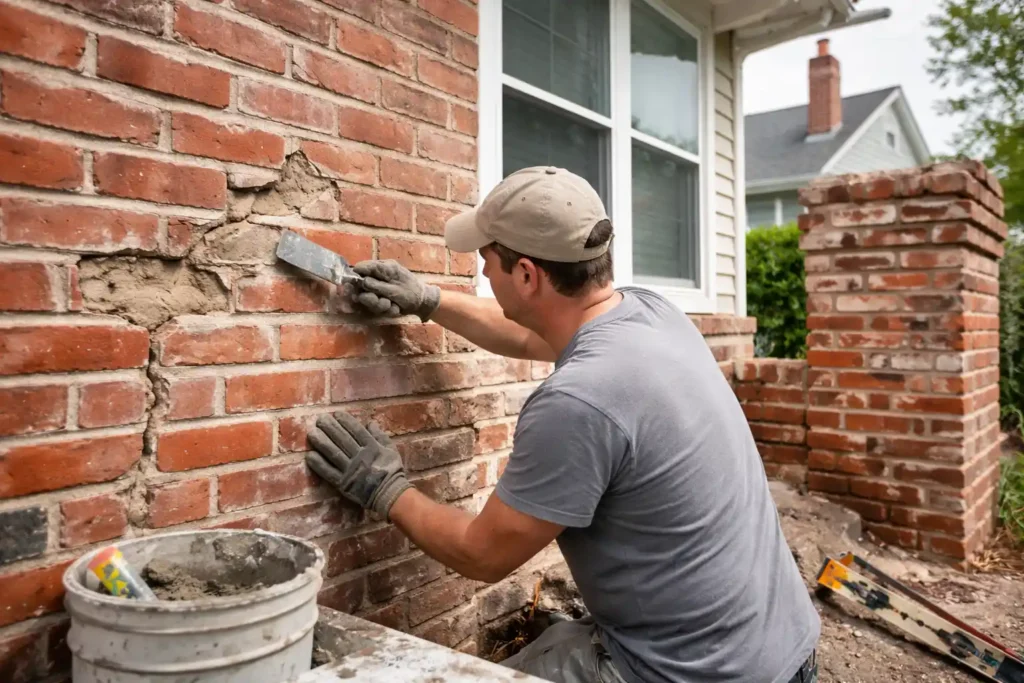
There’s another wrinkle with EIFS specifically. Many systems installed before 1999 in the Northeast didn’t have a drainage plane built in. Standards improved after that, but most owners have no idea which version is on their house, and it’s not something you can tell just by looking. It takes someone who’s handled both cement stucco and EIFS for decades to spot the difference at a glance and know which repair approach the wall actually needs.
Not every crack means trouble. We get calls about a thin line in the stucco, maybe near a window corner, and half the time it’s nothing to lose sleep over.
Hairline cracks in the top coat happen. Stucco shifts a little as a house settles and temperatures swing through the seasons. If the crack is thinner than a credit card, hasn’t grown, and there’s no soft spot or dark stain around it, you can probably leave it alone for now.
Some homeowners just touch it up with a bit of exterior caulk rated for stucco, then paint over it. That’s a fine short-term fix for a true hairline crack on a wall that’s otherwise solid.
Here’s the line we watch for, though. A crack that’s spider-webbing outward, or one near a roofline, window, or old chimney tie-in, is a different animal. That’s usually where water gets behind the wall, not just a surface issue.
So don’t panic over one small line. But don’t ignore a pattern of them either, that’s usually water talking, not just the stucco settling.
Have questions? We’re happy to help. (732) 400-4020
Call (732) 400-4020. CMB Jersey Shore Stucco and EIFS Repair & Installation is ready to help.
Here’s what happens once you call. We don’t just glance at the crack you’re worried about and walk away. We look at the whole wall, because a stain by your window might trace back to a problem near the roofline.

Nine times out of ten, homeowners call us about a crack. What they really have is a moisture problem that’s been building behind the wall for a while.
That’s the part most people don’t see coming. And it’s why we don’t just skim caulk over a crack and call it fixed. A patch that ignores water intrusion just fails again in a year or two, sometimes worse.
Since 1985, our team has worked on both traditional cement stucco and EIFS across New Jersey and New York, from brownstones to waterfront homes. That range matters here, because the repair approach for hard coat stucco isn’t the same as for a synthetic system, and mixing up the two leads to bad fixes. Call (732) 400-4020
Homes along Ocean Avenue take a beating that inland houses never see. Salt air eats at caulk joints and control seams year round. Add wind-driven rain off the water during a nor’easter, and any small gap in a stucco or EIFS wall becomes an entry point fast.
We’ve worked on plenty of houses near Pier Village where the ocean view is beautiful but the exposure is brutal. Salt crystals build up in hairline cracks. The cracks widen. Water gets behind the wall. Our team sees this pattern constantly on the east side of town.
So what does that mean for your wall? It means small problems don’t stay small near the water. A hairline crack that might sit fine for years in a quieter part of town can turn into a soft spot within a season out here.
We check for it every time we’re out this way.
And if your home has EIFS instead of traditional stucco, the risk changes shape but doesn’t go away. Older EIFS systems, especially ones installed before 1999, often lacked a drainage plane. Water gets in, has nowhere to go, and sits against the sheathing. Most owners have no idea which system is on their house until someone opens the wall up.
Common questions about Exterior Walls
We can usually get out to your Long Branch home within a few days of your call, sooner if you’re seeing active staining or a soft spot. Wall damage near the ocean tends to move fast because of wind-driven rain, so we try not to make you wait weeks for a look. When you call, tell us what you’re seeing, a crack, a stain, a musty smell, so we know what to check first.
We walk the entire exterior, not just the spot you’re worried about, because a stain near one window can trace back to a problem elsewhere on the wall. We tap the stucco to listen for hollow spots, test moisture around windows and trim, and check if your wall is EIFS or hard coat stucco. Then we explain what we found in plain terms before any repair starts.
Homes facing Ocean Avenue take a harder hit from wind-driven rain, which pushes water into small gaps that would stay dry on an inland house. That extra moisture gets trapped behind stucco or EIFS and causes rot before you ever see a crack. If your home faces the water directly, it’s worth getting checked a little sooner than a house set further back from the shore.
A crack is usually cosmetic if it’s thinner than a credit card, hasn’t grown, and there’s no staining or soft spot nearby. A crack that’s spreading outward, sitting near a roofline or window, or paired with a dark stain is a different story, that pattern usually means water is already behind the wall. If you’re not sure which one you have, press near the crack. A soft or spongy feel means it’s more than surface deep.
Yes, the repair method that works on hard coat stucco will not bond right on EIFS, and the other way around. EIFS is a foam board with a thin finish coat, while hard coat stucco is cement troweled over wire lath, so they need different patch materials entirely. Many older EIFS systems in the Northeast also lack a drainage plane, which changes how we approach the fix. Most homeowners can’t tell the difference just by looking at it.
Yes, if it’s a true hairline crack in the top coat only, with no staining or soft spots around it, exterior caulk rated for stucco and a coat of paint is a fine short-term fix. But if the crack is spreading, near a roofline or old chimney tie-in, or paired with a musty smell, caulking over it just hides a moisture problem that keeps getting worse underneath.
With nearly 40 years of experience since 1985, we at CMB Jersey Shore Stucco and EIFS Repair & Installation, have been perfecting the art of standardized and/or customized stucco finishes. Call Now (732) 400-4020
Effective & Fast Service
Available for 24/7 Emergency Assistance
Quick & Easy Communication
Effective & 100% Satisfaction Guarantee
FREE Appraisal with NO Commitment
Cost-Efficient & Reasonable Pricing
Flexible Schedule at Your Convenience
Awesome 5-Star Customer Satisfaction
CMB Jersey Shore Stucco and EIFS Repair & Installation’s residential and commercial work is always accomplished with
excellent craftsmanship for beautiful and durable results.
 Call (732) 400-4020